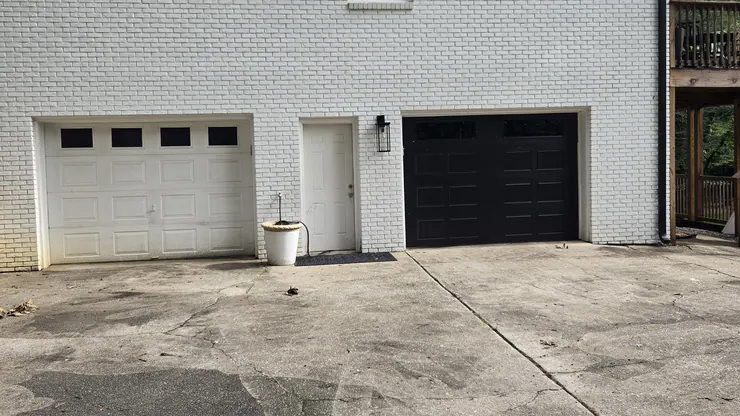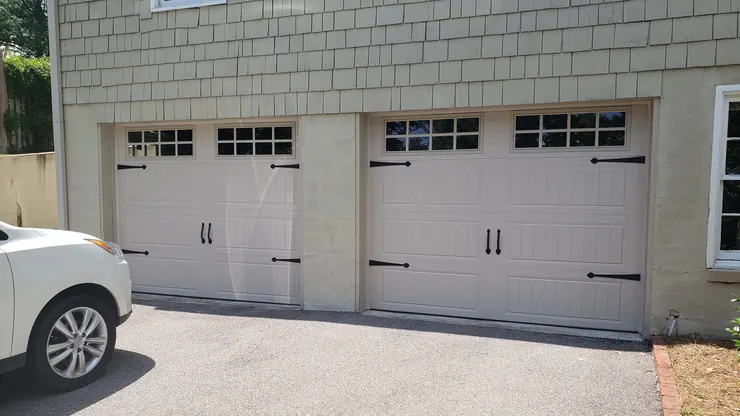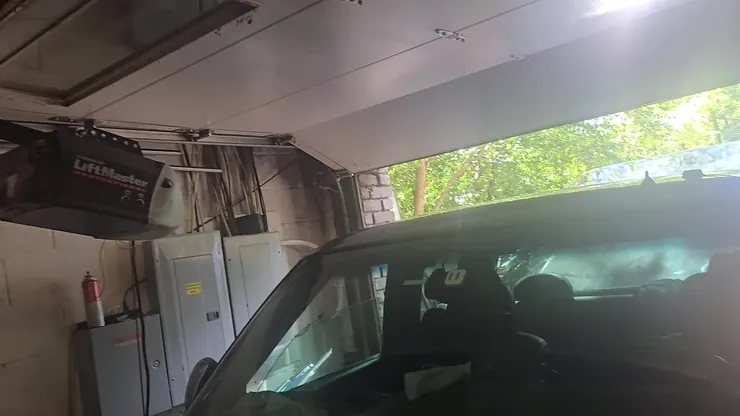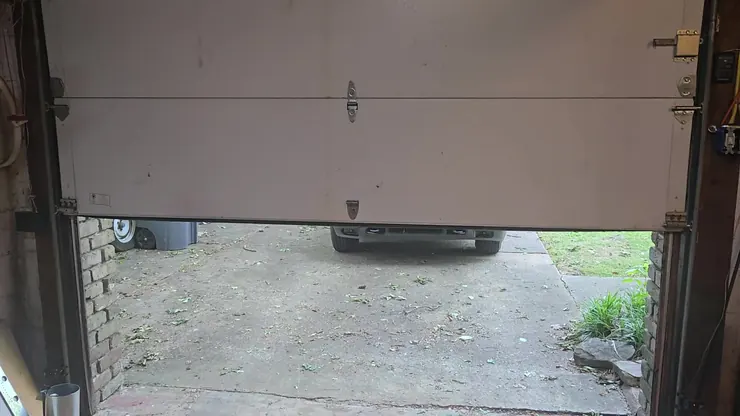
An Alabama summer turns a garage into an oven, and if the garage is attached, some of that heat comes right into the house. Insulating the garage door is one of the easier ways to fight back. Here are your options, what each one is good for, and one thing most insulation guides forget to tell you.
Why bother?
- A cooler garage, which matters if you work out or work on things in there.
- Less heat coming through the wall you share with the garage, so the AC doesn't work as hard.
- The things you store out there take less of a beating.
- A quieter garage: insulation deadens street noise and door rattle.
The three kinds of insulation
Polystyrene foam panels
Rigid foam boards cut to fit inside each section of the door. Cheap, light, easy to put in yourself, and moisture won't hurt them. They don't do much for noise, and they can crack if something bumps them.
Polyurethane foam
Foam that's sprayed or injected into the door, where it expands and fills every gap. It insulates best and makes the door stiffer, but it costs more, and it really isn't a do-it-yourself job.
Reflective foil
A shiny layer, often foil over foam or bubble wrap, that bounces the sun's heat back out. Light and easy to put up. It works best paired with foam, because on its own it doesn't do much about heat soaking through the metal.
Which one is best in our heat?
For the most protection, polyurethane. On a budget, polystyrene panels. If the door gets full sun, reflective foil on top of foam helps the most. When you shop, compare R-values: the higher the R-value, the better it insulates.
Before you add insulation to an old door
Here's the part most guides skip: insulation adds weight, and your springs are set for the door as it is now. Add enough weight and the door gets hard to lift, the opener works harder, and the springs wear out sooner.
So after you insulate, check the balance. With the door closed, pull the opener's release cord, lift the door to about halfway and let go. If it doesn't stay put, call us to adjust the springs. Please don't adjust them yourself. While you're at it, make sure the panels don't rub the tracks or rollers when the door moves, and seal the gaps: weatherstripping along the sides and a good bottom seal keep the hot air out.
Or get a door that comes insulated
A new insulated steel door from Amarr or Clopay has the insulation built in and springs sized for its weight. If your door is old anyway, it's worth pricing both ways. See new garage doors.
Keeping it working
- Once a year, look for gaps, dents, damp spots or mold behind the panels.
- Replace weatherstripping when it cracks or goes flat.
- Keep the garage dry and aired out.
Want a price on an insulated door, or someone to check your springs after you insulate? Call or text (205) 907-8179.